

MAN am I beat. I’m used to high volume, hard training, but this training to prepare for the upcoming Vancouver Amateur Sumo Tournament is seriously something else! Between judo, Greco-Roman wrestling, and then the actual sumo training sessions themselves, I am being thrown into the deep end of new activities that are intense in ways I haven’t ever fully experienced or appreciated.
Intensity aside, whenever you do something you’re not used to doing, you will experience much more difficulty doing it, and much more fatigue after having done it, regardless of your level of physical fitness and ability at other activities. I have come to appreciate the great difference between striking and grappling in terms of how each respective discipline fatiques your body. I’m used to the rhythm of striking – the breath, the expansion and contraction of your muscles, the moments of relaxation vs the moments of explosive action – I can navigate these things with my body in a way that feels so natural I could throw out kicks and punches practically all day long without gassing out. But grappling fatigues the muscles in very different way. The rhythm of the breath is very different as well, and the relaxation and tensing of muscles required for effective grappling is not something I have years of intuitive understanding of, so I am no doubt tiring myself out prematurely by my inexperience and lack of understanding of when to relax and when to use strength. But most of all, while my Karate practice has always involved some grappling, there is a world of difference between doing a take down on an opponent at the end of a few punches, and doing dedicated grappling practice against an uncooperative opponent who trains that discipline full-time.
The great strength (and perhaps also weakness) of grappling is that it pretty much innately must be practiced with another person. You can shadow box or hit a bag far more easily than you can “shadow wrestle” – although there are champion judoka who claim to owe their success to shadow wrestling imaginary opponents. But it is often said that the most advanced piece of training equipment you can use is another human being. So whether striking or grappling, it is always when practicing with another human being that you will learn the most – especially if that practice is more “alive” by being performed in a spontaneous, minimally constrained manner against an uncooperative opponent i.e. sparring. Having an experience of something hits far more more deeply than being taught a lesson about something. Too many times in my martial arts career I’ve been training a student and told them again and again and again to keep their hands up to protect their head, but it is only when I give them a gentle little tap on the head with my focus mitt or muay thai pad after they’ve let their guard down while punching, that the lesson magically seems to stick. So, too, when you spar with an opponent, perhaps in a constrained manner so as to put you in a particular situation which you must then solve, you will learn lessons far more deeply and intuitively by experiencing a situation and then having to use your body to navigate it – often very quickly and spontaneously without any opportunity to “think it through”. It is your muscle memory and limbic system that is learning, more than your conscious mind.
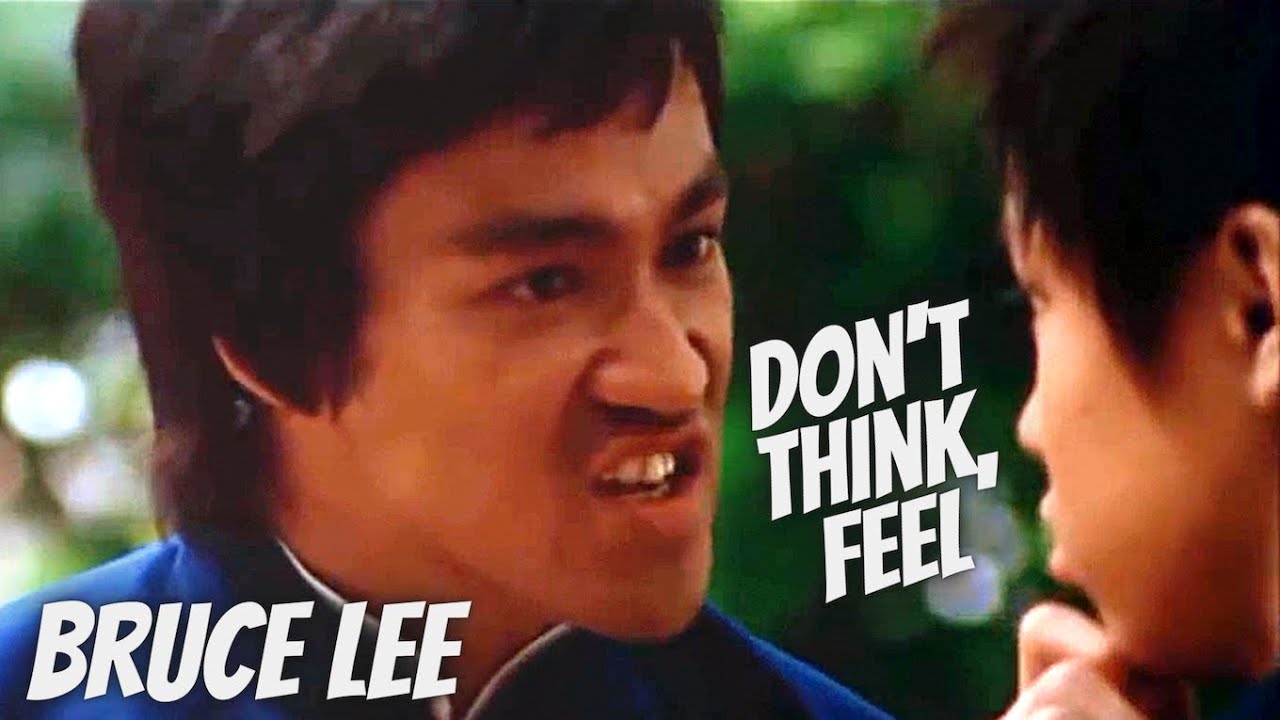
Thoughts move fast, but nerve activation at the site of the action being performed will always be faster than the time it takes for a conscious thought to be processed into a motor nerve impulse and travel down the spine to tell the muscles what to do. There is certainly a time and a place to teach and drill techniques, but none of those drills or techniques are really going to stick until you’ve experienced using them in a “live” manner. If I just tell you “If your opponent does this, then you do that” it really isn’t going to matter until you’ve lived it, so to speak.
And OH BOY am I living a lot of “experiences”.
I am going up against all these experienced wrestlers and judoka, most of whom are men who weigh at least 20-50 lbs more than me, but all of them have a great deal more experience at dedicated grappling practice than me. While I’m not completely helpless out there thanks to my solid karate stance, my tai chi/kung fu sticky hands training, and, of course, my big, big muscles, but many of my rounds against the higher belts just involve me getting thrown or foot swept with impunity, or at the very least, me fruitlessly struggling against an opponent, maybe resisting his take downs, but not scoring any of my own. If I’m lucky, and I’m up against someone who isn’t too much bigger or too much more experienced than me, I might actually have a chance to score one of my comparatively clumsy take downs on them!
Now, in fairness to me, this is actually a pretty good level of performance for a “beginner” in this discipline, and I have definitely improved over the course of this training period. The judo boys all seem very impressed by my performance – they asked me the other day after training “After the tournament is over, will you still come back to train with us?”, and my heart melted. But at the same time, for somebody like myself who has been training and teaching for as long as I have, this has been an immensely humbling experience. It would be very easy for me to respond to taking so many Ls in training right before a competition as discouraging. I might even avoid doing such training to preserve my ego – I think I certainly have at various points in my life. But every single one of these rounds where I’m getting tossed around, I’m learning. I’m seeing my vulnerabilities, I’m realizing what opponents might do to me in the ring, and I’m getting an intuitive understanding of why we do the things I’m being taught to do – both here and in Karate class.

In my experience, it is always to your advantage to train with people who are “stronger” than you are – whether “strong” means physical strength or technical ability and experience. I’ll never forget the times I trained at the gym with this guy who was a good 100 lbs heavier than me, and who was immensely strong. Just a big beefus! I was pretty young, and pretty strong myself, but this guy was just on another level of strength from me. He was the first person I had ever met who could do the full 300lb stack on the lat pulldown machine. Before meeting him, I never even really fathomed that this would be a possibility for a “normal” person. But he showed me it was possible, and so I became inspired in my training, and it wasn’t long before I could do the full stack, too.
Going up against more experienced opponents in judo and wrestling shows me what is possible to do, while going up against bigger, stronger opponents is like lifting weights in that it is preparing me to overcompensate and be able to dominate the comparatively smaller opponents I am likely to be matched up against, come Basho-Time.
It might feel like I’m losing again and again, but my motto in this training has become “Losing is Winning”.

Imagine if my preparation for this tournament just involved me doing things I’m comfortable with and only facing opponents who didn’t challenge me. How prepared would I likely be to face real competition in the tournament? Furthermore, would I be psychologically prepared to lose if my training only involved me winning?
My own psychological demons, which have often pushed me to hide away and avoid physical and emotional discomfort, also frequently take the form of bemoaning the burden of being born transgender. This world simply isn’t a fair one, to many people, including transgender people. So it is easy for us to fall into self-pity and to wish for a better life free of the painful memories and social hardship of being different from most of the people around you. It is true, this world can and should be a better, more fair one, but it does us no good personally to be trapped in wishing it were so, or that our own circumstances were different so we might avoid the painful unfairness. I am only snapped out of these feelings by remembering those people who seem to get everything they want in life. People who have never known any hardship and who always get whatever they want, invariably suck. These are your typical conservative elites, your rick kids, the assholes who have no compassion for others and who sit smugly in their belief of their own superiority. They’ve only ever experienced getting what they want and they chalk it up to just how great they must innately be, rather than, say, because they were born into money and privilege and were given everything they needed to succeed, including insulation from the consequences of their failures. Rich people talk down to us poors as though our poverty is a personal failure and their wealth a personal virtue, and not predictable results of systemic inequality. Most people eat a diet high in junk food, but only some people have the unlucky genetics that makes them get fat from eating junk, and then those who eat junk but are still skinny look down on fat people and tell them their failing is a lack of will-power. It’s like that study where Monopoly players were given unfair advantages over their competitors and who consequently came to believe their success at the game was due to their incredible Monopoly skills, rather than all that extra money they started with.

As much as it sucks to lose, you don’t want to be that person who has only ever won. That person is incredibly fragile, or at the very least, they suck to be around and everybody hates them. It’s far better to be an honest loser than an undeserved winner – spiritually, if not for your dental health. Of course, I would prefer to live in a fair and just world where everybody gets what they need and the concept of ‘winners’ and ‘losers’ is largely obsolete. But even in such a world, I think it would still be necessary for humans to experience difficulties and challenges, and to not always get whatever they want all of the time.
If I hid away from training with powerful judokas, my martial arts would not only be limited, but worse, I would be living in a fantasy where I had no idea how fragile and vulnerable I would be against a truly skilled grappler. If I win this tournament, great! All my training paid off. But if I lose, that’s almost better. Losing just gives me information about what I need to work on for next year. If I win without facing significant challenge, will I really be prepared for future challenges? Of course I want to win, both to know that my efforts can yield results, and because cultivating the experience of trying your best at something is important, so I must go into this tournament with a serious intention to win. But what I want most of all is to be the strongest version of myself. If that requires losing, then I’m willing to pay that price however many times it takes. And after having gone through this process of training, I can confidently feel that, if I do lose, whoever was able to beast me must have really earned it, and so how can I be upset?
Whatever comes in this tournament, as well as whatever comes in this crazy, shitty life that continually seems to throw Ls towards trans people’s way, I feel more confident facing it having looked in the mirror and seen my own limitations, as well as looking to people stronger than me and seeing just how far outside of those limitations I could travel, if I’m willing to be uncomfortable for a time.
Get your tickets here to see me WIN the Vancouver Amateur Sumo Tournament!
I NEED YOUR HELP!
Training for this tournament has taken up a lot of my time and I need to make some extra money before the end of this month to meet all of my expenses.
If you value what I do or care about trans athletes, and if are able to, please consider tipping me on Ko-fi or supporting me on Patreon.
Any amount of support is immensely appreciated!


 Life of Bria